Hunter Gatherer

I wanted to be a chef when I was young.
Or a farmer.
Neither happened, at least not in the way a school careers officer would have understood. No whites and tall hats. No acreage neatly squared off on a grant application. Those dreams were quietly filed away under “childhood ideas”, the sort we’re told to grow out of.
But I don’t think they ever left.
They just went underground.
Cooking was always there. Not as a performance, not as a hobby dressed up for Instagram, but as a rhythm. A family thing. A necessary thing. Food wasn’t abstract in our house. It was planned, prepared, stretched, shared. You learned early that meals didn’t appear by magic… someone made them happen.
And farming… well, even without land, the instinct was there. The fascination with where food comes from. The satisfaction of producing rather than merely consuming. The quiet pride of bringing something to the table that didn’t arrive shrink-wrapped with a barcode.
Looking back, it feels less like ambition and more like wiring.
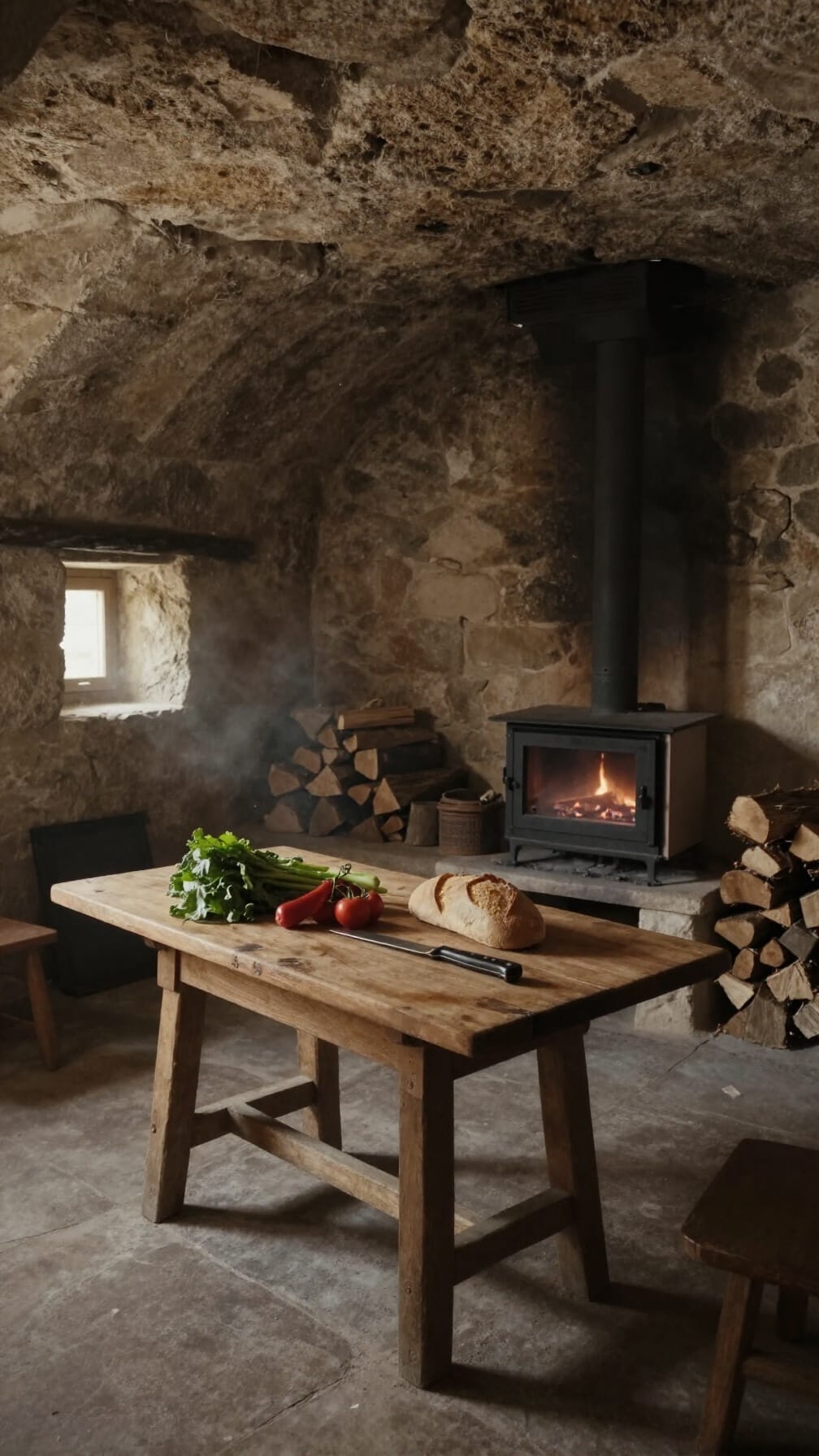
Fast forward a few decades and I’m living in rural Spain, in what can only fairly be described as a cave. No double glazing. No hum of central heating. No comforting illusion that everything will just work if you ignore it long enough.
Instead, life is measured differently.
How long will this gas cylinder last?
Do we order firewood now, or wait a month and risk the price jumping?
If winter lingers, will what we seasoned last year be enough to carry us through… or did we misjudge?
In summer, we save cardboard, packaging, old letters. Not sentimentally… practically. This becomes kindling. Heat. Survival, if you want to be dramatic, though most days it doesn’t feel dramatic at all. It feels normal.
We plan trips to the next village not because we fancy a wander, but because fuel costs money and timing matters. You don’t pop out for milk. You think. You consolidate. You make lists. You commit.
And food… food tastes different when it’s bought locally, when you know the hands that grew it are probably the same hands you’ll shake at the bar. The local economy stops being a concept and becomes a relationship. Freshness isn’t a marketing word. It’s obvious.
What’s surprised me most isn’t that this life feels harder.
It doesn’t.
It feels older.
There’s a pace to it that echoes something primal. Something pre-subscription, pre-notification, pre-everything-being-available-all-the-time. The days have edges again. Seasons matter. Preparation matters. Waste feels offensive in a way it never quite did before.
You stop outsourcing responsibility for your own comfort.
And in doing so, something clicks.
I didn’t become a chef or a farmer in the modern sense. But maybe that was never the point. Maybe those childhood aspirations were pointing at something deeper… a hunter-gatherer instinct that never really went away, just got buried under convenience.
Because here’s the thing. Strip away the gloss and most of what I do now would be instantly recognisable to someone from a few thousand years ago.
We gather fuel.
We store food.
We plan for winter.
We trade locally.
We make do.
We adapt.
And strangely, in a world obsessed with optimisation and ease, this way of living feels more honest. More human. Less distracted.
It isn’t about rejecting modern life or romanticising hardship. It’s about remembering that comfort has always been something you actively maintain, not something you’re owed.
Maybe that’s why this life hits home so hard now.
Not because I’ve gone backwards… but because I’ve circled round to something true.
The child who wanted to cook.
The child who wanted to grow things.
They weren’t naïve.
They were just early.

Until Next Time