The Cider Incident
Or, How I Learned That Being the Tallest Has Its Consequences

I was sixteen when I discovered that looking older than your peers is both a superpower and a curse. Mostly a curse, as it turns out, especially when cider is involved.
The Lake District. February. A geography field trip that promised glacial valleys, U-shaped formations, and the sort of hands-on learning that would look excellent in our coursework portfolios. What it actually delivered was three days in a youth hostel that smelled of damp socks and institutional soup, sleeping in bunk beds that creaked every time someone so much as breathed.
But here’s the thing about field trips when you’re sixteen: the geography is absolutely the least interesting part.
By this point in my school career, something had shifted. I was no longer the kid who got picked on for having a posh accent—or rather, I was still that kid, but I’d grown into my face a bit, shot up a few inches, and developed the particular kind of stubble that makes shopkeepers not ask too many questions. I could pass for eighteen. Maybe even nineteen if I slouched the right way and looked vaguely bored.
This made me valuable. Suddenly.
The micro-crew I’d gathered—a handful of lads who’d decided I was acceptable now that I had utility—made their position clear on the coach ride north: “Dominus, mate, you know what you’ve got to do.”
I did know. Of course, I knew.
There was a small off-licence about fifteen minutes’ walk from the youth hostel, nestled in a village so picturesque it looked like it had been designed by someone from the National Trust. Stone walls. A church. Probably some award-winning fudge shop somewhere. And crucially, a shop that sold alcohol to anyone who looked even remotely plausible.
I walked in with the kind of false confidence you can only muster when you’re absolutely bricking it inside. The shopkeeper barely glanced up. I walked out with enough cider to inebriate a small regiment.
Large bottles. The cheap stuff. The kind that comes in plastic and tastes faintly of apples that died sad, industrial deaths. We’re not talking craft cider here. We’re talking fuel.
The Cache
Back at the youth hostel, I was a hero. For about four hours.
We stashed the bottles under my bed—my bed, naturally, because I was the one who’d bought them, and therefore I was the one with the most skin in the game. The logic was flawless in the way that sixteen-year-old logic always is: which is to say, not at all.
That evening, after the teachers had droned on about ox-bow lakes and relief rainfall, we snuck the bottles out. Passed them around. Drank with the kind of enthusiastic recklessness that comes from never having had a proper hangover. Someone suggested we play a drinking game. Someone else fell off a bunk bed. It was, by all accounts, a roaring success.
When the teachers came knocking—because of course they came knocking, teenagers aren’t exactly subtle when they’re drunk—we went into full denial mode.
“Alcohol? No, sir. Absolutely not. We’re just high on geography, sir.”
They didn’t believe us, obviously. But they couldn’t prove anything. Not yet.
We thought we’d got away with it.
The Leak
Here’s what sixteen-year-old me didn’t know about cider: it doesn’t stay put.
At some point during the night—probably when one of the lads stumbled back from the loo and knocked into the bed frame—one of the bottles shifted. The cap must have been loose. Or cracked. Or possibly never properly sealed in the first place, because we bought the cheapest cider known to man.
It leaked.
Slowly. Inexorably. The way catastrophe always does when you’re not paying attention.
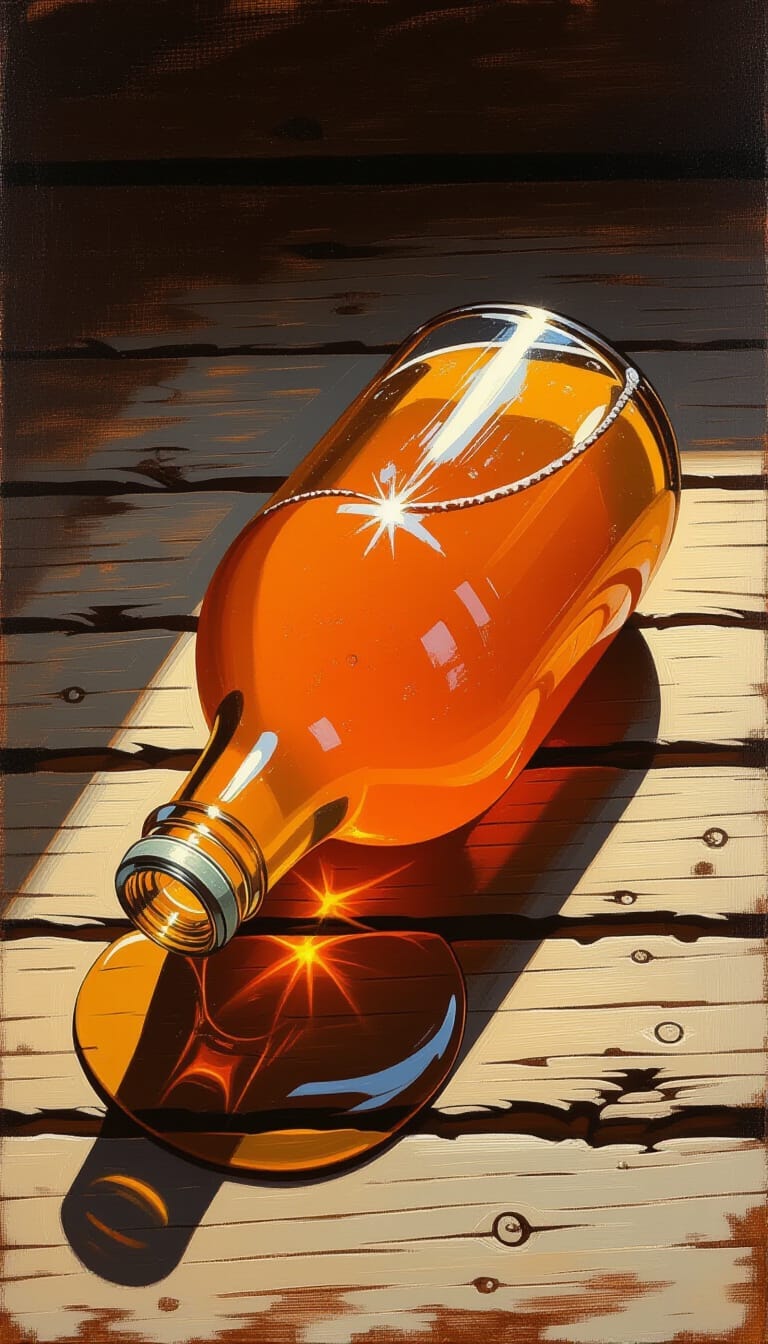
By morning, there was a sticky, amber puddle spreading across the floor of my room. And because the universe has a sense of humour, my room was directly above the teachers’ quarters.
The cider seeped through the floorboards. Through the ceiling. And dripped—actually dripped—onto the bed of Mr Henderson, the head of geography and a man not known for his tolerance of teenage nonsense.
The game, as they say, was afoot.
Taking the Hit
They rounded us up before breakfast. The whole micro-crew. Stood us in a line in the corridor like we were about to be executed, which, emotionally speaking, we were.
Mr Henderson’s ceiling was dripping. The room smelled like a brewery. The evidence was literally seeping through the building’s infrastructure.
“Whose room was it?”
Silence.
“Whose bed was the alcohol under?”
More silence.
I looked at the lads. The lads looked at the floor. No one was going to speak. No one was going to share the blame. I’d bought the cider. It had been under my bed. I was the oldest-looking. The most plausible adult. The fall guy.
“Mine, sir.”
Mr Henderson looked at me with the kind of disappointment that only a truly dedicated teacher can muster. The kind that makes you feel about three inches tall, even when you’re the tallest in the room.
“Wait here.”
The punishment was swift. A phone call home. A strongly worded letter. The promise that this would appear on my school record, whatever that meant. The rest of the trip was spent doing extra coursework while everyone else went on walks.
But worse than all of that—worse than the teachers, worse than the shame—was facing my parents when I got home.
My mother was the kind of woman who could express profound disappointment without raising her voice. My father just looked tired. They didn’t shout. They didn’t ground me. They just... sighed. And somehow that was worse than any punishment.
No one from the micro-crew said thank you. No one acknowledged what I’d done. By Monday, it was already a funny story they told without me.
The Lesson
Here’s what I learned from the Great Cider Incident of the Lake District:
When you take the hit for other people, make absolutely sure they’re the kind of people who’d do the same for you.
Because the uncomfortable truth is this: most of them won’t. They’ll let you stand there alone. They’ll watch you take the blame. They’ll be grateful for about thirty seconds, and then they’ll move on with their lives, whilst you’re left dealing with the consequences.
I spent years doing this. Taking hits for teams that wouldn’t have crossed the road for me. Covering for people who saw my willingness to absorb blame as a useful personality trait rather than a character flaw. Being the person who could “handle it” because I looked older, sounded posher, and seemed more capable of weathering the storm.
But here’s the thing about storms: they still hit you, whether you can handle them or not.
The cider incident taught me that loyalty is supposed to be mutual. That being useful isn’t the same as being valued. That the people who let you take the fall are precisely the people who never deserved your protection in the first place.
These days, I’m a lot more careful about whose battles I fight. About whose secrets I keep. About whose messes I clean up.
Not because I’m less generous—I’d still take a hit for the right people. But I’m no longer interested in being the designated scapegoat for anyone who happens to be standing nearby when the ceiling starts dripping.
Some lessons cost you a field trip. Some cost you a bit more.
The trick is making sure you actually learn them.
What are your thoughts?
What are your experiences of similar?
One thing I am doing at the moment is connecting with authors with a similar mindset and who want their work “everywhere”…via my personal blog Dominus Markham, I have started to create a reviews section, and if any of you would like to feature there, keeping in mind I use around 27 Social Media Profiles to promote anything on my blog…DROP ME A LINE…

Until Next Time